

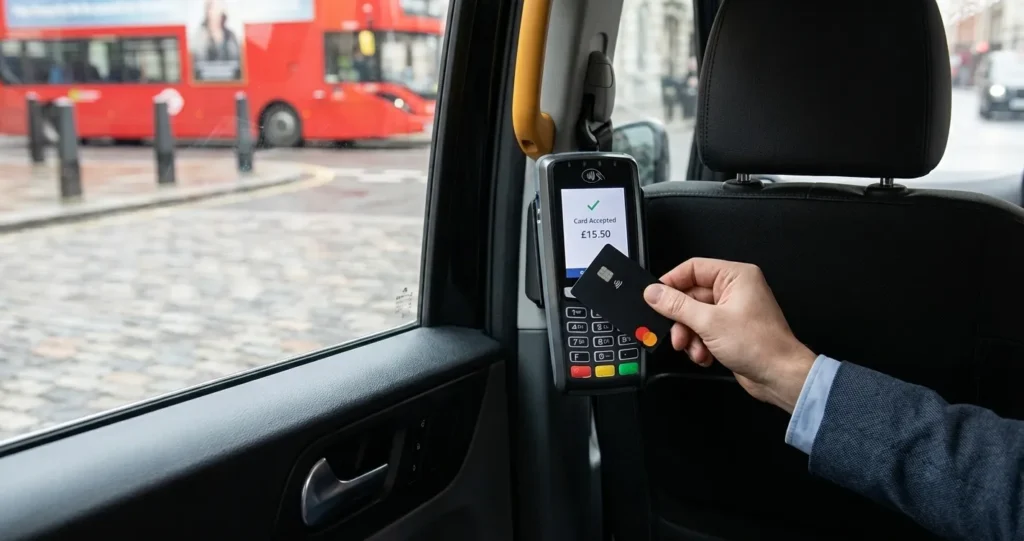
Most UK taxis now accept cards. In London, every licensed black cab must take credit and debit cards via a TfL‑approved reader and issue a receipt. Private‑hire and app‑booked cars typically process payments through their apps or onboard machines. In many other cities card readers are compulsory, but some rural drivers still prefer cash. Carry a backup method just in case of network glitches or machine failures.
Why Card and Contactless Payments Are Now the Norm for UK Taxis
Cards account for around 61 % of UK payments and nearly four in ten transactions are contactless. Cash makes up only about 12 % of payments. During and after the pandemic many people switched to contactless for hygiene and convenience. Taxis followed suit because tapping a card or phone speeds up drop‑offs and reduces risk for drivers.
Payment Methods in UK Taxis: From Contactless Cards to App Payments
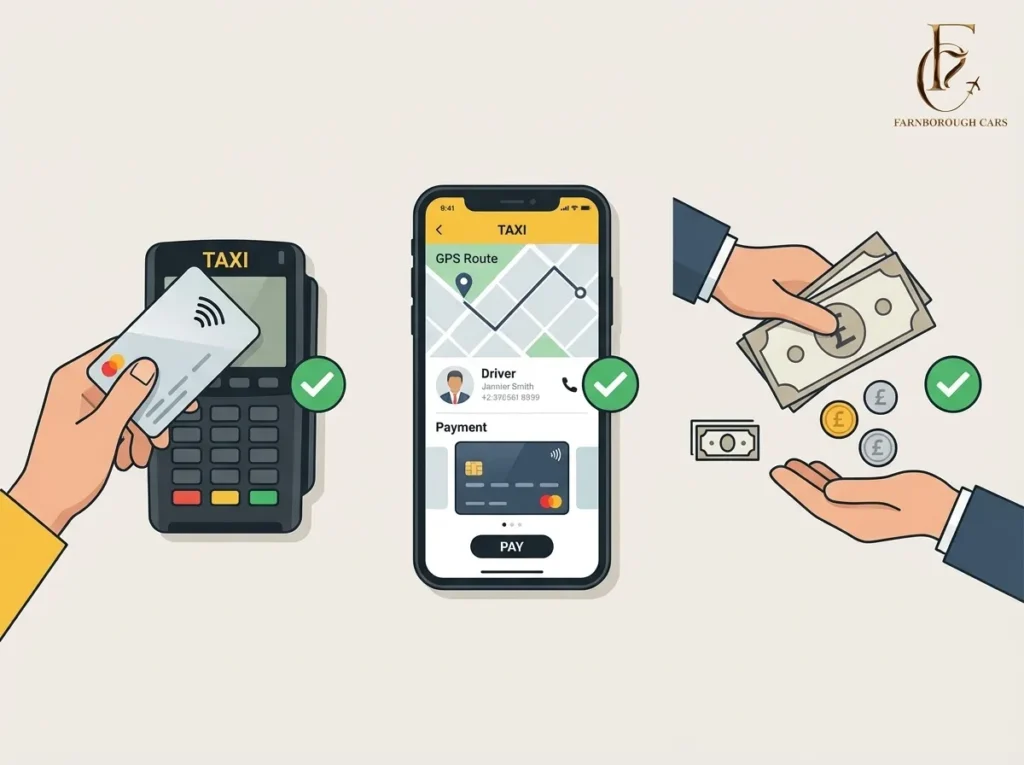
If you’re not sure whether your card or phone will work in a cab, here’s an overview of the most common payment methods:
- Contactless Cards and Mobile Wallets: Visa, Mastercard & Mobile Wallets: Licensed black cabs in London have card readers fixed inside. Tap your debit or credit card or use Apple Pay or Google Pay; if the fare exceeds the contactless limit the reader will prompt you for a PIN. Most major cards (Visa, Mastercard, Amex) are accepted.
- App‑Based Payments: Pre‑booked rides through apps Free Now are paid automatically via the app. You add a card once, and fares (and tips if you choose) are charged at the end of the trip.
- Cash and Currency: Paying with Pounds vs Foreign Cash: Many drivers still accept cash, which can be handy if the reader or mobile signal fails. However, UK taxis don’t routinely take euros or dollars; paying in foreign cash usually means poor exchange rates. Bring pounds or a card.
Legal Requirements and Regional Differences for Taxi Card Payments in the UK
London: Mandatory Card Readers for Black Cabs
Since 2016 every licensed black cab in London must have a TfL‑approved card reader fixed inside the passenger area and provide a printed receipt if asked. Drivers cannot add surcharges for card use.
Other UK Cities and Rural Areas: Varying Rules on Card Acceptance
Some councils, including Birmingham, Liverpool, Chelmsford and Oxford, now require taxis to carry card machines, and Southampton adopted a similar rule in 2024. Elsewhere, acceptance varies: many hackney carriages and private‑hire vehicles have readers voluntarily but there is no national mandate. In rural areas, network coverage may be poor, and some drivers still prefer cash. Pre‑book or ask before you board if you need to pay by card.
In Farnborough and nearby towns such as Aldershot, Fleet, Camberley and Frimley, card‑friendly taxis are increasingly common, but it’s wise to confirm when you book or hail a cab. Our taxi service, based in the Farnborough area, accepts card payments and serves customers across these local communities.
Benefits and Potential Issues of Paying by Card in UK Taxis
Benefits of Card Payments: Convenience, Safety & Hygiene
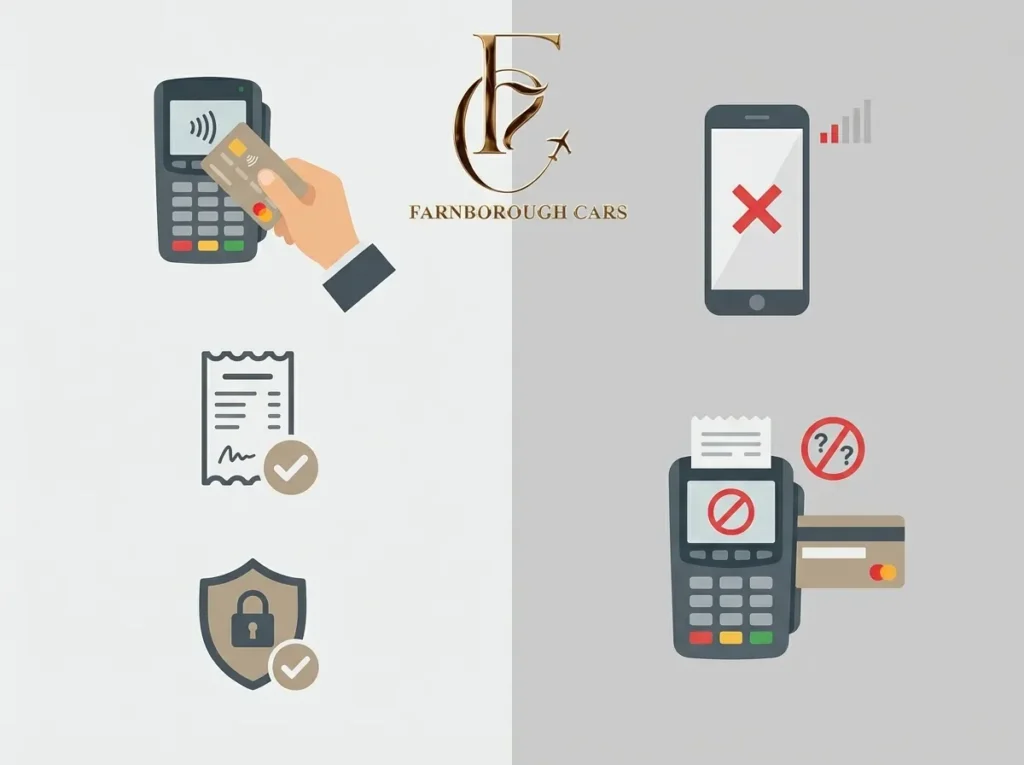
- Fast and simple: Tap‑and‑go payments eliminate the search for change and speed up drop‑offs.
- Safer: Electronic payments reduce theft risk and provide an electronic record for expenses and budgeting.
- Hygienic: Many passengers prefer not to handle cash after the pandemic.
Potential Issues: Connectivity, Broken Readers & Surcharges
- Connectivity or machine failures: Card readers depend on mobile signal; rural areas and car parks can cause problems. Carry backup cash or ask to stop at an ATM.
- Broken readers: London drivers shouldn’t operate if their machine is broken. Elsewhere, ask before starting your trip.
- Illegal surcharges: It’s against UK law to add a fee for paying by card. If it happens, refuse politely or report it.
- Short‑fare refusals: Some drivers once avoided short journeys because of card fees. New rules in some cities (e.g., Southampton) now mandate card machines to prevent this.
How to Ensure a Smooth Payment Experience with Card Payments in UK Taxis
To avoid surprises:
- Book with reputable firms. Choose established companies or apps that list payment options.
- Look for card logos. In London the reader is in the passenger area; outside, check for a card machine before sitting down.
- Ask first. When there’s no mandate, asking if cards are accepted avoids awkwardness.
- Bring backup cash. Machines or networks can fail, especially at night or in rural areas.
- Request a receipt. London cabbies must print one if asked.
Currency & International Travel: How Visitors Should Pay for UK Taxis
For visitors from abroad:
- Use pounds or a bank card. UK taxis generally won’t take euros or dollars.
- Don’t exchange in the cab. Any driver who offers to accept foreign cash may give you a poor rate.
- **Pre‑book transfers.** Booking your airport ride with a reputable firm lets you pay online, often in your own currency.
- Carry a spare card and some GBP. International cards can trigger security checks; backup ensures you’re covered.
Common Questions Answered: Do Taxis Take Cards and Other FAQs?
Yes. All licensed black cabs in London must take cards via a TfL‑approved fixed reader and can’t add surcharges.
In London, yes. Elsewhere many hackney carriages carry readers but it’s not universal, so ask before you ride.
Yes. App‑booked rides Free Now charge your card automatically. If you book a minicab by phone, ask if they take cards.
Most black cabs and larger firms accept Visa, Mastercard and American Express. In small towns, carry a second card in case Amex isn’t accepted.
Yes, mobile wallets work like contactless cards. Hold your phone or watch near the reader until it beeps. For high fares you may need to enter a PIN or use a physical card.
London drivers shouldn’t operate with a broken card machine; elsewhere, ask at the start of the trip. If the device fails, pay cash, try another cab or stop at an ATM.
Description for this block. Use this space for describing your block. Any text will do. Description for this block. You can use this space for describing your block.
Leave a Reply
You must be logged in to post a comment.